
GM Animesh Ray
FIDE Grandmaster & Chief Coach
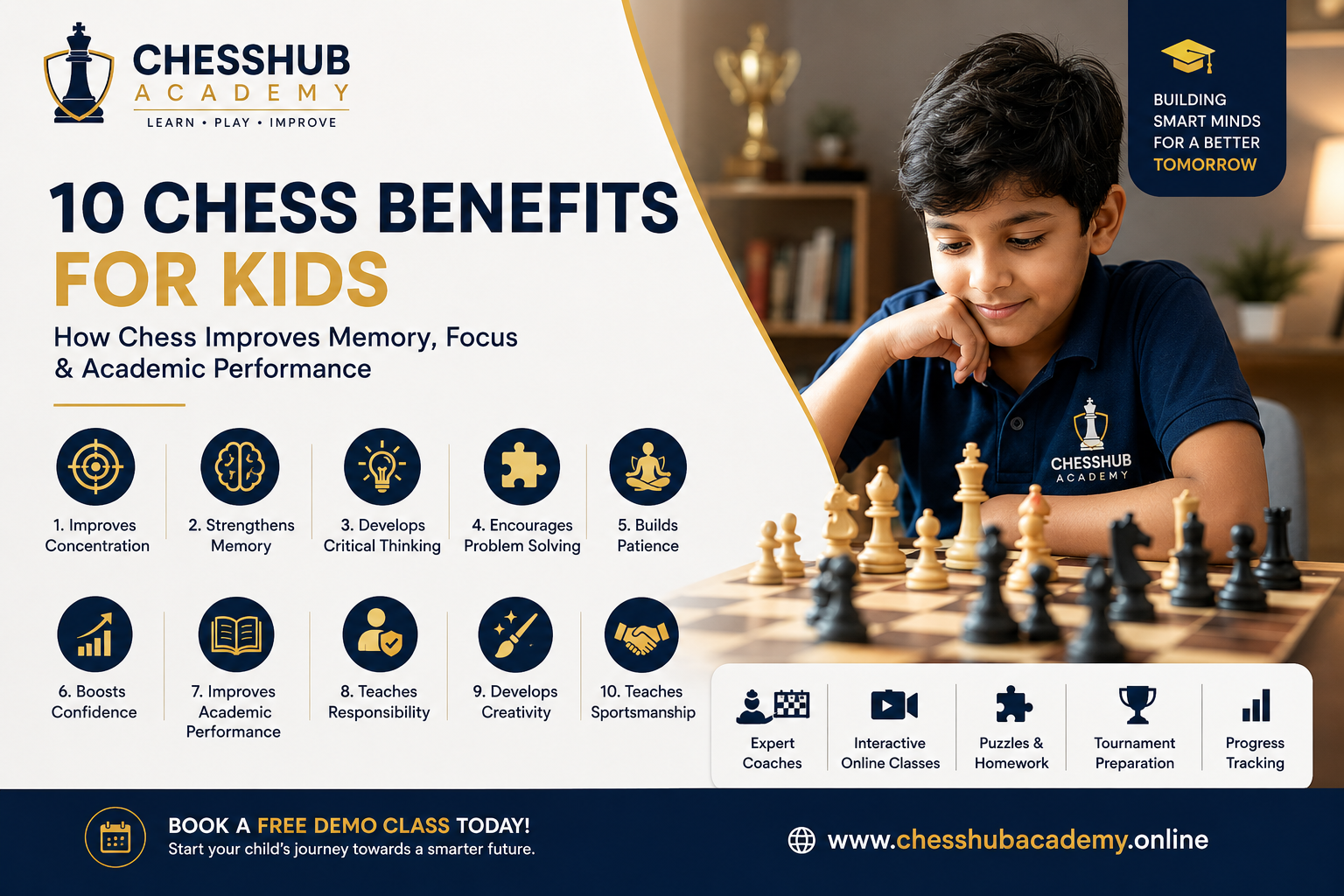
# 10 Chess Benefits for Kids: How Chess Improves Memory, Focus & Academic Performance
Chess is much more than a board game. It is one of the most powerful educational activities that helps children develop thinking skills, patience, creativity, and confidence.
Whether your child is 5 or 15 years old, learning chess provides lifelong benefits that extend far beyond the chessboard.
In this guide, we'll explore why chess is one of the best extracurricular activities for children.
1. Improves Concentration
Every chess move requires careful attention.
Children learn to focus for longer periods while analyzing positions and planning their next move.
Better concentration in chess often leads to improved focus in school.
2. Strengthens Memory
Chess players remember:
Regular practice naturally improves memory retention.
3. Develops Critical Thinking
Instead of guessing, children learn to ask:
This develops logical thinking and decision-making skills.
4. Encourages Problem Solving
Every chess position is a puzzle waiting to be solved.
Students learn how to:
These problem-solving skills transfer to mathematics, science, and everyday life.
5. Builds Patience
Success in chess rarely comes from rushing.
Children learn to:
Patience is a valuable life skill.
6. Boosts Confidence
Winning games, solving puzzles, and improving ratings give students a strong sense of achievement.
Every improvement builds confidence both inside and outside the classroom.
7. Improves Academic Performance
Research suggests chess training may help improve:
Many schools around the world include chess in their educational programs.
8. Teaches Responsibility
In chess, players cannot blame teammates.
Every decision has consequences.
Children learn accountability and become better decision-makers.
9. Develops Creativity
Chess is not only about calculation.
Players constantly create new plans, combinations, and attacking ideas.
Creative thinking becomes a natural habit.
10. Teaches Sportsmanship
Students learn:
These values help children throughout life.
Why Learn Chess with ChessHub Academy?
At **ChessHub Academy**, we provide structured online chess coaching for beginners, intermediate, and advanced players.
Our programs include:
Whether your child wants to learn the basics or compete in tournaments, we provide a learning path designed for long-term improvement.
Ready to Start?
A single chess lesson can begin a lifetime of learning.
Book a free demo class today and discover how chess can help your child develop confidence, concentration, and critical thinking.
👉 Visit: https://chesshubacademy.online
Frequently Asked Questions
What is the best age to start chess?
Most children can begin learning chess between 5 and 7 years old, although motivated learners may start even earlier.
Does chess improve IQ?
Chess develops thinking skills such as memory, concentration, planning, and logical reasoning. These skills support overall learning.
How many days should children practice?
Practicing 20–30 minutes a day is enough for beginners to make steady progress.
Is online chess coaching effective?
Yes. Interactive online coaching allows students to receive personalized guidance, solve puzzles, analyze games, and play practice matches from home.
Final Thoughts
Chess teaches children far more than how to win games.
It builds character, discipline, confidence, and lifelong thinking skills.
If you're looking for an educational activity that combines learning with fun, chess is one of the best choices.
Start your child's chess journey today with ChessHub Academy.
Ready to Boost Your FIDE Rating?
Book a free 1-on-1 trial session with our FIDE Grandmasters. Get personal feedback, tactical analysis, and a custom training road map!